05.00-08.00
GIRLS
We get up and brush our teeth.
We collect water from the well up to four times. We carry the water in pots called Garia or Gara. We carry two, sometimes three, pots on our heads at a time.
BOYS
We get up and brush our teeth. Then we exercise. We go jogging for good health.
I get up at 7:30. I brush our teeth, I do my hear, I dress and I go to school
viernes, 29 de octubre de 2010

RICH AND POOR COUNTRIES
Country | Life expectancy | Infant mortality per 1000 | Daily food intake in calories | GNP ($) |
| USA | 76 | 9.7 | 3642 | 25,880 |
| NIGERIA | 49 | 121 | 2114 | 280 |
| SWEDEN | 78 | 5.8 | 3049 | 23,530 |
| UK | 76 | 9.5 | 3218 | 18,340 |
| JAPAN | 79 | 4.8 | 2858 | 34,630 |
| BRAZIL | 65 | 63 | 2643 | 2,970 |
| GERMANY | 77 | 7.5 | 3476 | 25,580 |
| INDIA | 58 | 95 | 2204 | 320 |
| MALAYSIA | 68 | 30 | 2723 | 3,480 |
| UGANDA | 49 | 107 | 2221 | 190 |
- Which countries on the table are the RICHER countries?
HINT! There are FIVE of them.
The five RICHER countries are
- USA
- GERMANY
- JAPAN
- SWEDEN
- UK
- Which countries on the table are the POORER countries?
HINT! There are FIVE of them.
The five POORER countries are
- BRAZIL
- INDIA
- MALAYSIA
- NIGERIA
- UGANDA
- Complete each sentence with the word HIGH or LOW:
| Rich countries have .........................HIGH.............................................Life Expectancy Poor Countries have ........................HIGH.............................................Infant Mortality Rich Countries have.........................HIGH.............................................. Daily Calorie Intake Poor Countries have a..........................LOW.......................................... GNP |
- Read the statement below:
The USA is the RICHEST country in the world’.
- Do you agree with this statement? Give a reason for your answer!
..............................................................................................................................
OR
I disagree because...................................................................................................................
miércoles, 27 de octubre de 2010
DIFFERENCES BETWEEN RICH AND POOR COUNTRIES
Exercise 1:
Country: Païs
Life Expentancy: Experiencia de vida
Infant mortality per 1000: Nens mort per 1000
Daily food intake in calories: Mitjana de consum d'aliments en calories
GNP:Gross national product
Country: Païs
Life Expentancy: Experiencia de vida
Infant mortality per 1000: Nens mort per 1000
Daily food intake in calories: Mitjana de consum d'aliments en calories
GNP:Gross national product
viernes, 22 de octubre de 2010
Rich people, poor people
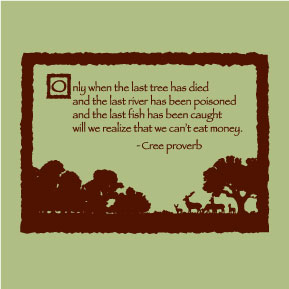
Només quan l'últim arbre hagi mort,
i l'últim riu hagi estat everinat,
i l'últim peix hagi estat agafat,
ens adoranem que no podem menjar diners.
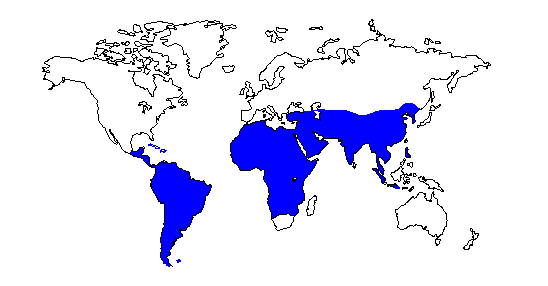
There are many divisions between the people of the world. One of the biggest is the difference between those who live in the RICH NORTH and the POOR SOUTH. The map below shows that the world can be divided into 2 parts: the Rich North and the Poor South.
Countries in the Rich North are also called DEVELOPED COUNTRIES. Examples of developed countries are: Spain, Great Britain, Germany, the USA, Japan and Australia.
A DEVELOPING COUNTRY is another name used to describe countries in the Poor South. Ethiopia, Mozambique, Brazil and India are all examples of developing countries.
The countries in the Poor South are also called LEDCs (Less economically developed countries) or Third World Countries. The North refers to richer countries, which are sometimes called the First World, MEDCs (More economically developed countries) or The West.
| RICH NORTH WORDS | POOR SOUTH WORDS |
| DEVELOPED COUNTRIES | DEVELOPING COUNTRY |
| MEDCs | LEDCs |
| First World | Third World |
| The North | The South |
| COUNTRY | DEVELOPING COUNTRY | DEVELOPED COUNTRY |
| Catalonia(Barcelona) | X | |
| Cuba(La Havana) | X | |
| Scotland(Edinburgh) | X | |
| Sudan(Khartum) | X | |
| USA(Washington) | X | |
| Germany(Berlín) | X | |
| Brazil(Brasília) | X | |
| Ethiopia(Adis Adheba) | X | |
| India(New Dehli) | X | |
| New Zealand(Wellington) | X | |
| Colombia(Bogotá) | X | |
| Australia(Camberra) | X |
jueves, 21 de octubre de 2010
My description
I'm forteen years old. I am from Barcelona but I live in Sant Joan Despí. I live with my parents and my sister.
My hobbies are play football, do skate, play computer games, reeding and play station.
My favouite colour are red and blue but this colours are of F.C BARCELONA.
I playing football in a club of S.j.d. My favourite singers or bands are:
- "Sfdk, El Piezas, Aloy, Rosa Rosario, Linking Park, Eminem, etc....
My hobbies are play football, do skate, play computer games, reeding and play station.
My favouite colour are red and blue but this colours are of F.C BARCELONA.
I playing football in a club of S.j.d. My favourite singers or bands are:
- "Sfdk, El Piezas, Aloy, Rosa Rosario, Linking Park, Eminem, etc....
miércoles, 20 de octubre de 2010
The righ of the chlid
CHILD SOLDIERS: Recent estimates suggest that there are almost 300,000 child soldiers throughout the world fighting in over 40 conflicts. In countries such as Burma, Sudan and Afghanistan, children are fighting alongside adults in wars. Many child soldiers are forcibly removed from their homes, taken from their families and made to fight.
 EXERCISE 1 EXERCISE 1
|

viernes, 15 de octubre de 2010
Rights and responsibilities
1 The right to an education -------> To attend school an do your homework every day.
2 The right to own a pet -------> To look after and care for your pet.
3 The right to be treated fairly -------> To act responsibly and treat others fairly.
4 The right to free speech -------> To remember that other people have different opinions.
5 The right to shelter -------> To treat your house and the objects it in with respect.
6 The right to privacy -------> Not to invade other people's.
7 The right to play i be cared for -------> To care for people and to treat others the way you would espect to be treated.
2 The right to own a pet -------> To look after and care for your pet.
3 The right to be treated fairly -------> To act responsibly and treat others fairly.
4 The right to free speech -------> To remember that other people have different opinions.
5 The right to shelter -------> To treat your house and the objects it in with respect.
6 The right to privacy -------> Not to invade other people's.
7 The right to play i be cared for -------> To care for people and to treat others the way you would espect to be treated.
Suscribirse a:
Entradas (Atom)